

By David Stephen
Sedona, AZ — There is a recent [June 8, 2026] analysis in Nature, Why are so many young people getting cancer? What researchers do and don’t know, stating that, “Colorectal cancer is one of the clearest examples: in the United States, the incidence of advanced colorectal cancer has increased by about 3% each year since around 2010 in people between the ages of 20 and 49. In 2023, colorectal cancer became the leading cause of cancer death in this age group.”
“And Ng pointed to research published this year that analysed changes to chemical groups attached to DNA strands as a way to track environmental exposures and lifestyle factors that could influence early-onset colorectal cancer risk. That study found possible links to diet, smoking and exposure to an herbicide called picloram, which is used on pastures and roadsides.”
“Multiple cancers are increasing in incidence globally among individuals under the age of 50,” oncologist Kimmie Ng told the audience at the American Society of Clinical Oncology meeting in Chicago, Illinois, last week. “The vast majority are considered sporadic, with unknown cause.”“Worldwide, more than 9,000 cases of cancer are diagnosed each day in adults under the age of 50, epidemiologist Hyuna Sung told the annual meeting of the American Association for Cancer Research (AACR) in San Diego, California, in April.”
“”Rising incidence of cancers among young adults does not reflect a single story,” said Sung, who works at the American Cancer Society in Atlanta, Georgia.”
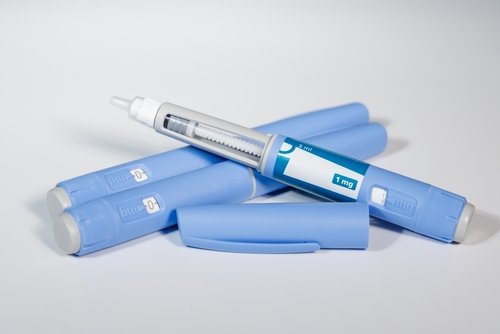
There is a recent [June 9, 2026] report on NPR, GLP-1s appear to protect against cancer. Researchers are trying to figure out how, stating that, “The most prominent among them tracked medical and prescription records of over 10,000 patients with early-stage cancer, and found GLP-1s reduced cancer risk in 6 out of 7 cancers — four of them at statistically significant levels. Breast, liver, colorectal and non-small cell lung cancer risks declined significantly; kidney and prostate declined somewhat; pancreatic cancer rates were affected the least.”
“But radiologist Elizabeth McDonald at the University of Pennsylvania, who co-authored that study, says the protective effects with GLP-1s appear greater than with other treatments or lifestyle changes. “The weight loss alone just didn’t account for the magnitude of the observed effect,” McDonald says.”
“McDonald suspects that GLP-1 medicines, as they regulate hunger and digestion hormones, also trigger other metabolic pathways. They may reduce inflammation, for example, which is a known driver of cancer.”
There is nature custom media discussion, The brain and nervous system are a new frontier in cancer research, stating that, “The first of these pillars is discovery neuroscience, which focuses on basic neuroscience biology, nerve-tumour interactions, the blood-brain barrier and the unique features of the brain’s immune system. The second theme revolves around primary and metastatic cancers of the brain and nervous system, including investigating new therapies for these cancers, while the third seeks insights into the neurological toxicities of cancer therapies. The final pillar is dedicated to understanding the impact of cancer and its treatment on patients’ mental health and wellbeing.”
“The Cancer Neuroscience Program encompasses the dual role of modern cancer care, say its leaders. On one hand, it is generating insights into how nervous system tumours grow and how the many unique features of the nervous system regulate cancer, which could lead to novel treatments. On the other, it aims to support a patient’s wider wellbeing.”
There is a paper in ACSJ, Depression, anxiety, and the risk of cancer: An individual participant data meta-analysis, stating that, “No associations were found between depression or anxiety and overall, breast, prostate, colorectal, and alcohol-related cancers. Depression and anxiety (symptoms and diagnoses) were associated with the incidence of lung cancer and smoking-related cancers (hazard ratios [HRs], 1.06–1.60). However, these associations were substantially attenuated when additionally adjusting for known risk factors including smoking, alcohol use, and body mass index (HRs, 1.04–1.23).”
“Depression and anxiety are not related to increased risk for most cancer outcomes, except for lung and smoking-related cancers. This study shows that key covariates are likely to explain the relationship between depression, anxiety, and lung and smoking-related cancers.”
Cancer Neuroscience — Theory
Empirical neuroscience has established that neurons are responsible for regulation of internal senses, just like they are responsible for memory, emotions and feelings.
Regulation of internal senses include activities of the colon, lungs, pancreas, circulation, throat, and so on.
Regulation can be defined as the giving of limits and extents that functions would work. This means that there is a minimum and there is a maximum, for functions. So, while organs, tissues are located elsewhere in the body, how much they should work, is given from brain, by neurons — and their electrical and chemical signals.
Empirical neuroscience has also established that neurons are often in clusters in different parts of the brain and those clusters become responsible [mostly] for specific functions. For example, some of the clusters of neurons in the hypothalamus regulate the pancreas and liver, amongst others. The brainstem regulates the lungs. Different parts of the brain regulate the colon. Simply, in these places, groups of neurons appear dedicated to specific functions.
This means that if there is some error in the part of the brain having the cluster, the function there could be lost.
But what exactly does it mean that a group of neurons regulate a specific function? One of the ways to answer is to postulate that electrical and chemical signals are responsible for regulation.
This implies that what actually holds the information of how an organ should work are electrical and chemical signals. How so? It is true that during several functions, genes are expressed, however, neurons that participate in functions [of human life and experiences] have to be active — that is fire or have electrical activity, then also transmit or have chemical activity.
Simply, while neurons can express genes without electrical and chemical signals, for them to actually do functions like memory, feeling, emotion and regulate internal senses they need to use electrical and chemical signals.
While it is often said that neurons use electrical and chemical signals for communication, it is postulated here that electrical and chemical signals hold the configurations [or formations] for functions.
This says that whatever a specific memory is — or an emotion, or a feeling or the limit or extent of how an organ should function — is by a specific assembly of electrical and chemical signals.
How? Electrical and chemical signals interact. Their interactions have attributes. It is in their interactions that the configurations of functions are obtained. This means that alone, they may not do much but as soon as they interact, the assembly or formation they have to be to specify a function is accessed.
Now, this can be described as a general way that electrical and chemical signals act to make functions. So, the interactions and then the factors [or attributes] of those interactions that grade them or decide how much they can interact.
Some of the factors or attributes include attention, less than attention, subjectivity and intent. There are others like splits, sequences, thick sets, and so forth.
Attention is obtained by the set with the highest intensity of electrical signals or the set with the most volume of a significant chemical signal [say glutamate] or the most of a collection of chemical signals.
Just one set among all the sets has the most prioritization in a moment. There are often fast and numerous interchanges with others. There are also often sets with nearness to prioritization [or attention], but just one is able to be in attention, at any moment.
This means that while attributes are present across interactions, there are still ways they have interdependence. This says that while some factors may not often be too influential, prioritization [or attention] makes a lot of determination.
Now, because electrical and chemical signals are involved with memory, emotion, feeling and regulation functions, if there is too much maximum somewhere it might affect a minimum elsewhere or the possibility for others to have maximum [or prioritization].
Simply, there are some factors of interactions, where one may affect others, especially attention. Attention [or prioritization] for example, has to be held by most sets, over certain intervals. It could be within 24-hour for some, or below, or a little over.
This implies that all sets for regulations have to get in attention from time to time. This prioritization helps them to stay within what can be called their [functional] elastic limits.
For example, the liver has to work within a certain efficiency rate, when busy or not so busy [so to speak]. It may have [say] a lot of things to do, and need to work at a certain rate, to keep up. So, it needs to get prioritization in those moments. Also, even when it is not so busy, it needs to get prioritized, to act like it is busy as well, keeping its readiness possible, for when there is a lot of work. If it does not get prioritized enough, when there is no work, it may lose how to do so, when there is work — so to speak.
Now, if other sets are prioritized too much, not allowing the liver set to get prioritized, it may be working under low limits — when it has a lot of stuff to do, or if it does not get enough prioritization, it may not get to try what it means to work at a maximum efficiency rate.
If this happens over a period of time, it may start to affect the liver, in some form and may accumulate. The same with other organs, so to speak.
Simply, all internal organs have sets in the brain that would need to be prioritized from time to time. When this does not happen, due to disruption by other sets getting prioritized more often, it may start to create a low efficiency cycle, which may also not let an anomaly [within] be noticed early, and corrected [within].
Computational Oncology to Model Under-50 Cancer Surge
In trying to figure out why there is cancer surge among people under 50, it is also important to look within the brain.
There are observations in cancer neuroscience that “neurons and nerves — via a variety of mechanisms that researchers are still teasing apart — seem to regulate almost everything about cancer, from tumor initiation in many cases to tumor growth, tumor invasion and metastasis, probably resistance to therapy, and evolution of the disease.”
“The cancer cells use the nerves as highways to exit a primary tumor site and metastasize. Tumors are more electrically active than normal tissues.”
So, nerve cells regulate internal signals as well as tumors. How can it be possible to model regulation, especially minimum and maximum? To be able to prospect why cancers take off, and what happens during it as well?
Now, if there are permutations for configurations of electrical and chemical signals in sets, towards cancer related functions, how can they inform how to disrupt the configurations of the bioelectric activity of tumors? Also, how can the regulation of cancers [say maladaptive neuroplasticity] by electrical and chemical signals, in sets, be discontinued or mitigated, towards starving tumors? When cancers use nerves as highways to metastasize, how can there be anti-metastatic configurations of electrical and chemical signals, in sets, against these [including with signaling molecules or growth signals]?
Also, if GLP-1s seem helpful against cancers, could it be that some of the configurations that may have boosted some cancers, were cut? Could it also be that GLP-1s were also able to spread prioritization to some sets, giving then more time, than they would normally have? These questions can be answered by modeling electrical and chemical signals, thoroughly, to close in against unknowns in oncology.
Modeling electrical and chemical signals in multiple ways, with extensive measures could be useful to understand an angle of the under-50 cancer surge as well as disruption of nerves and neural involvement in cancers. This can be accelerated fast with preliminary results by August, 2026 with clinical study designs ready as well.
2 Comments
For a few years now, there have been articles about nano and micro plastics being found throughout human bodies worldwide. They are found even in the brain. And they are found in all earthly environments. Those articles usually conclude with comments like: it remains to be seen how this will affect or are affecting human health.
Duh! I think we’ve found the answer in this upswing in cancer among the young. And so it will continue. We’ll keep seeing more illness as humans have no effective plan to remove these plastics (plus chemicals) from our one and only environment.
Blue B,
you’re correct. All plastics are toxic carcinogens especially to those who manufacture them. Black plastics are the absolute worst according to the Material Data Sheets (MSDS) that were required by law to be prominently posted and available to all employees. Much to the chagrin of many of my employers in the automotive industry I worked for, I actually took the time to read them (usually after a spill or leak took place and they acted as if it was perfectly safe). Heres a sample-
https://www.starplastics.com/wp-content/uploads/2021/06/SDS-ABS53-RangeBlack-2020.pdf
Unfortunately under MAGA and the Orange loser basically eliminating Federal Workplace Safety and employee protections make forever chemicals (and leaking them into waterways) like those used extensively in big industries and their sub contractors a new normal after nearly 70 years of massive expensive clean-ups (footed by YOU the tax payer) to clean up the massive dumping that took place during the Industrial Revolution and subsequent decades of massive industrial pollution (from coal sludge to forever chemicals) from factories, mines (arsenic, uranium etc.), agricultural use of toxic pesticides, mosquito mitigation using aerial spraying of DEET (nerve agent) etc.
It is going to get worse so long as the absurdities and criminality of Trump and MAGA continues. The have full intentions to drill, mine and frack every square inch of our natural parks and reserves and upon every indigenous reservation they think have precious natural resources that do not belong to anyone but those who own that land through formal treaty. In Oregon they have their eyes on massive quantities of lithium that sits on Shoshone and Paiute land, fortunately they are prepared to make an armed stand like the Canadian Mohawk did in 1990 against the Canadian Armed Forces-
https://en.wikipedia.org/wiki/Oka_Crisis
of an MSDS for black plastics
Sad how we have a government who kill its own citizens for profit like the Russians and North Koreans. We have the means and technology to do thinks much safer but it’s costly so they don’t want their tax free for life Epstein Class morons to lose any portion of their yuge bigly profits. And they make US pay for the cleanup! The current administration is purposely taking our country back to 1800 era industrial safety which was absolutely non existent!
Time for the Clown Show to be tossed into the SWAMP they stocked with swamp monsters!