

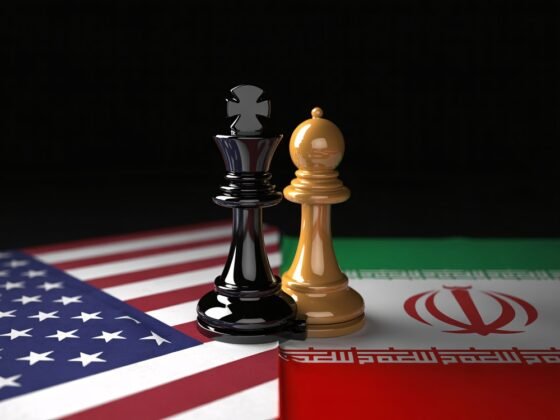
Sedona, AZ — Boy, did they make a mistake thinking they could take out Iran in a matter of weeks.
The gamble appears to have been that once Iran’s leadership was decapitated in a surprise attack, the Iranian people would rise up against the regime and finish the job.
But that didn’t happen.
Years of repression had already taken their toll on the opposition inside Iran. Those who might have challenged the government had been killed, imprisoned, driven into exile or intimidated into silence.
We should have understood that before believing assassinating the country’s leadership would automatically produce a popular uprising.
We also underestimated the resilience of Iran and its military.
Iran had spent years accumulating missiles, drones and other military hardware and building the ability to withstand an attack. The United States, meanwhile, has discovered something that should concern every American: even the world’s most powerful military does not possess an unlimited supply of the sophisticated weapons required to fight this kind of war.
The United States has burned through significant numbers of Patriot and THAAD missile interceptors. Some estimates now place Patriot inventories below 1,000 and THAAD inventories around 250. Those weapons cannot simply be replaced overnight.
That leaves American leadership in a precarious position.
Escalating the war means expending still more missiles, bombs and defensive interceptors. Eventually, protecting American troops, bases and allies throughout the Middle East becomes increasingly difficult.
Iran understands this.
That may be one reason Tehran believes time is on its side.
The United States can certainly continue striking Iran. What it cannot easily do is force a nation of more than 90 million people to surrender through air power alone.
And unless America is willing to contemplate an enormous ground war—which would create an entirely different military and political nightmare—the choices begin narrowing.
Which leaves the most obvious one:
Negotiate.
The problem is that Washington cannot simply announce that it wants out.
It has to find a way out while convincing the American public and the world that the objectives of the war were accomplished.
So, what happens next?
We hear that America’s principal military objectives have been achieved, that Iran’s ability to threaten the United States and its allies has been sufficiently degraded, and that continued warfare is therefore unnecessary.
That will provide the political language necessary to move from warfare to negotiation.
The Strait of Hormuz will undoubtedly be at the center of those negotiations.
Iran wants a continuing role in controlling what happens in those waters. Washington insists upon freedom of navigation. The eventual agreement may therefore be written so both sides can claim victory.
Iran will tell its people it defended its sovereignty.
America will tell its people it secured navigation through the Strait.
And everybody will declare success.
The nuclear issue may follow a similar path.
Iran could agree once again that it will not build a nuclear weapon while retaining some form of peaceful nuclear program. Washington could then claim it prevented an Iranian bomb, while Tehran could claim it preserved its right to nuclear technology.
Suddenly yesterday’s enemies could find themselves sitting across negotiating tables discussing sanctions, trade and commerce.
It wouldn’t be the first time.
Israel, meanwhile, would remain the regional military hammer—restrained when diplomacy is working but always present should Iran again threaten Israeli or American interests.
Iran’s regional proxies would remain another piece on the chessboard, capable of being activated should the confrontation resume.
Nobody necessarily wins.
Nobody admits defeat.
Everybody saves face.
And perhaps that is how this war eventually ends.
There is, however, another possibility worth watching.
Cuba.
The Trump administration has already dramatically increased pressure on the Cuban government, and Pentagon officials have reportedly examined military options involving the island. That does not mean an invasion has been ordered or will happen.
But politically, Cuba presents an interesting contrast with Iran.
It is geographically close to the United States, militarily far weaker than Iran, and its government is already under enormous economic pressure.
A rapid American success there—or even the collapse of the Cuban government without a full-scale invasion—could shift the public’s attention away from an inconclusive struggle in the Middle East and toward what the administration could portray as a historic victory in the Western Hemisphere.
Whether that happens remains to be seen.
But one thing seems increasingly clear.
America cannot fire expensive missiles indefinitely while waiting for Iran to surrender.
Iran knows it.
Washington knows it.
The defense contractors certainly know it—they’re now being told to dramatically accelerate production.
So beneath all the threats, speeches and declarations of victory, diplomacy is becoming increasingly difficult to avoid.
The challenge now isn’t merely finding a way to stop the war.
It’s finding a way for everybody to stop fighting while claiming they won.
By Tommy Acosta
5 Comments
“Boy, did they make a mistake thinking they could take out Iran in a matter of weeks”
Good opinion piece Tommy, but let’s make 100% clear who “they” are when it comes to who foolishly and ignorantly started yet another forever war that HE-Donald J Trump promised his minions he would never ever start and did anyway. Just as he has long intended regardless of the cost in lives and resources.
Trump’s recent shameful and outlandish remarks about how “troops have not been deployed in a combat zone nearly long enough!” Tough talk from a coward whose only battles have been divorces, sex worker NDA settlements, cases against the constitution and law precedent, sex offender (he being the offender) lawsuits and bankruptcy filings, who claims his Vietnam was not getting STD’s at the clubs and island resorts he is very well known to have spent his time in rather than serving his country when asked to do so. His slander of the troops from “losers and suckers”, “just headaches”, “appallingly disfigured veterans should not be seen in public” to yesterday’s cowardly remarks about troops not being deployed long enough is solidified and verified by his history of anti American, anti service member, anti veteran history of remarks.
Lucky for him, the US has been building a fully integrated, professional military that won’t stage a coup on his Tyrannical Hineyass and walk off the job on him like employees anywhere would’ve done long ago when the first anti American comments left his felonious mouth. His “the flogging will continue until the mood of the crew improves” nonsense should be the immediate end to the war and his Presidency. But alas, his minions have fallen for the lies about his lies so he continues to destroy our country one day at a time!
Our troops do as they’re told and asked for the most part. They don’t do it for a stupid piece of cloth, or even out of Patriotism. They do so for the soldiers, marine, airmen and sailors to their left, right, front and backs.
I warned this was a quagmire in the making from day one! I spoke of how Iran like Russia plays a loooonnng game. That the approach was all wrong and defied logic our Armed Forces has developed over its 250 years of existence when it came to unconventional and guerrilla warfare. Iran has it right just as Uncle Ho did during our war upon Vietnam! They’re using minimal troops and weapons to inflict massive damage against the US and our very few remaining so called allies (really just business partners) in the region. To steal a phrase from the late great Colonel David Hackworth-“to win we must out G the G” as he famously stated about the guerrilla war in then ongoing in Vietnam. America forgot this lesson shortly after Vietnam and has been getting itself out G’d left and right, from Beirut, Iran Contra, El Salvador/Hondurus, Panama, Somalia to Iraq, Afghanistan and now Iran. Funny how we just went full circle at the costs of thousands of American GI’s lives and all for a country that elected a fascist convicted criminal moron to do things he promised them but clearly lied to them all. From the economy to the war he has only delivered American deaths and American misery.
Iran isn’t going to capitulate. Not ever! Not even if Trump decides to nuke them as he has eluded to wanting to do numerous times over the past few decades. We may kill every innocent Iranian Civilian but we will never take out their government or its fervently committed military. They will crawl out of their hidey holes and fight to their last breath just as the Viet Minh and Vietnam Cong did despite our dumping millions of tons of high explosive bombs and millions of barrels of Napalm and Agent Orange upon them. Unlike the North Vietnamese civilians, they too had hidey holes as we discovered the hard way during Tet.
The real question now is, how many more Americans have to die for something that should have never happened in the first place- war upon Iran! We will either continue to kill Iranian civilian’s and lose American lives doing so, or we will run with our tails between our legs like we did during the fall of Saigon and more recently Afghanistan (we should never have been in either conflict to begin with)? The Iranians are not giving the ass that harangues and slanders its people and religion anything but a hard time remaining in the region until and long after Trump is out of office. Remember Iran has a loooonng memory and game. Just ask Salman Rushdie and the former Shah’s few surviving family members.
The war was initially started for a regime change and it will probably have accomplished that goal/ the only miscalculation is that it will probably be in Israel and the United States!!
Zach,
they changed the “regime” alright- for the worse! Unfortunately the US and Israeli regimes have stacked their decks even more than the Iranians by doing some of the exact same things- jailing dissidents for free speech, dismantling government as we knew it (taking a chainsaw to it all), stacking the courts to include the very corrupt sycophantic SCOTUS, going after legitimate journalists and journalism while preaching that their lies and propaganda are THE truth and ONLY truth despite being unsupported by any facts whatsoever, by telling us our eyes, ears and brains don’t work and that what we see and hear with them is wrong. If it weren’t for Gaza, Iran and Lebanon good ol’ boy BB would’ve been shit canned years ago. Same with Dump who has still yet to release the full un redacted Epstein report as promised and gotten us into forever war III. But Dump is great at convincing his minions that his lies are truth and his crime’s innocence.
For those of us who learned that 2+2=4 not 5 as our 4 (Dump, Netanyahu, Xi and Putin) World Leader War Criminal Pals would have you believe. Those who believe it to be 5 are the ones definitely suffering from TDS or Turd brain Derangement Syndrome despite their brainwashed attempts to point their feeble minded fingers at those of us who know better and are sane.
Waiting for the Dump Trolls to sling unsubstantiated lies and nonsense about how it’s ok for a POTUS to lie, cheat and steal on a daily basis while wearing a brown suit or having onset Alzheimer’s is the real crime in their tiny little minds⏰!
What is the timing of this war? Answer one day after being in negotiations.
What was the point in being in negotiations if you were going to bomb them (without congressional authorization) anyway.
What is the way out of this war? I do not have the answer but sending your son-in-law and real estate friend does not seem like the right people to do it. Chris Christie said if you want to buy real estate in Iran they are the right people and if you want to end a war you should send military people.
Michael,
Trump hates Muslims especially Persian Muslims along with every other minority on earth. He lies through his teeth daily about what is going on with Iran. His cast of negotiator clowns slinging shit at the Iranians on a daily basis while expecting them to roll over and capitulate when they clearly very much have the upper hand is absolutely ridiculous. Then he lies to us about how great everything is going when our own eyes and ears tell a completely opposite story. Iran has a stranglehold upon the Hormuz straight and their Yemeni Huti pals have a stranglehold upon the Red Sea’s shipping lanes. Iranian 1970’s era F15’s blew the crap out of at least one of our air defenseless bases in the region killing and wounding AMERICANS. They’ve shot down numerous multi billion dollar aircraft using ground fired surface to air missiles, small arms and even drones. They’ve blasted every US base, housing area, hotels where US Forces are known to lodge. To date 18 known (the Pentagon has been caught red handed low balling American casualties) US Service Members have been KIA! Hundreds WIA (many with permanent disabling conditions such as frontal lobe damage). So called allies have shot US fighter aircraft out of the sky. Troop morale is lower than whale shit because they’ve been sitting in a combat zone for 6 months without adequate food and water, broken laundry and latrine facilities, snail mail or lost mail from home and all the while while serving on ships with electrical failures and little to no AC (a ships SCIF which is the brain center of combat operations in the air, on and below the water’s surface requires AC to function due to the number of and heat from the computer systems used in them).
It’s absolutely true that the US government asked the Iranian government to take part in talks (likely so they could get them all in one place) and then bombed the hell out of them the very next day. We killed a good number of their longtime long term senior leadership but failed to take out the Ayatollah’s son and many younger fire brand IRGC members who now hold the helm in Iran. They are keenly aware that they were lied too and duped and they will never ever allow that to happen to their leaders ever again. They’re going to remain silent and unseen and use human curriers with multiple go betweens to keep them safe in their hidey hole bunkers.
The only two ways out of this war is for the US to tuck tail and run yet again from a shit storm we started. Or we nuke them and claim victory as we set the Middle East more ablaze than we already have. Which is precisely why we are despised by so called friend and foe alike in the region.
Chris Christie is but another politician criminal and drunkard but he’s correct on needing experienced trained military and civilian negotiators to end wars not boy friends, family members, realtors, Sax CEO’s who don’t know jack shit about our military and its capabilities vs limitations, world or more importantly regional history developed first hand over decades of working in the region.
Remember, Dump thinks he’s smarter than the generals (and he likely is smarter than the sycophantic fools who remain in command since all those with integrity have left or been fired by a make up wearing un qualified SEC DEF who thinks himself a warrior because he talks big crap while or military capabilities are slowly but surely decimated). I mention his wearing of makeup because he’s supposedly a homophobe 😂.
The King has No Clothes or Brain and it’s becoming more and more obvious by the second. He and ALL of his criminal cohorts have a day of reckoning coming these mid term elections. He’s a cornered desperate rat! This makes him dangerous just like he was on January 6th when he instigated an insurrection in attempt to overthrow his clear loss. Wonder what he and his CIA, FBI, DOJ and DHS have planned to save the rat? Whatever it is it is not going to be good for anyone except him and only him!