
by david stéphen
Sedona, AZ — AI agents have been unable to do for psychiatry and neuroscience, what they have done in mathematics, this 2026. First Navier-Stokes equation was solved by OpenAI’s GPT and then Riemann hypothesis was solved by Anthropic’s Claude this November, 2026.
While there is expectation that frontier AI models would continue improving towards solving tough scientific problems; in neuroscience, where they are pointed could matter more than following conventional directions.
Neurons are the basis of how the brain mechanizes functions, established across studies over a century. But explaining functions for neurons, specifically, has almost been impossible.
This means that if AI agents would solve psychiatry or at least move it from labels and descriptions, pursuing [just] neurons would be the wrong path.
Neurons are cells. They are not that flexible to specify respective functions. This means that another associated option must be sought towards that goal.
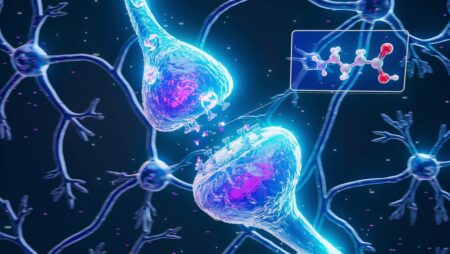
Neurons never carry out the functions of human life and experiences without electrical and chemical signals. This indicates that coalescing every effort around signals could become the change that psychiatry needs before 2030.
The millennium prize problem in psychiatry, neuroscience and brain science is to explain how electrical and chemical signals are responsible for brain functions.
This says that taking the signals as candidates of mind would be vital in the possibility to explain mental disorders, addictions and now human intelligence, amid the rise of artificial intelligence.
January, 2027 makes it a year since the American Psychiatric Association released a roadmap towards candidate biomarkers for the next iteration after the Diagnostic and Statistical Manual of Mental Disorders, Fifth Edition, Text Revision [DSM-5-TR].
But immediate goal is not even biomarkers, but to move psychiatry from labels and descriptions. This implies that to explain what is different between a mental disorder and another or the difference between an episode of a mental disorder and when it is not there.
Just to make this available and displayed by electrical and chemical signals would be pivotal to have a leap forward.
In psychiatry, antidepressants, antipsychotics, and anxiolytics target [for] chemical signals. Electrical, magnetic, and ultrasound stimulations target [for] electrical signals.
Even when psychiatric medications target enzymes, intracellular signaling molecules, metabolic, hormonal, neuroinflammatory or for receptor-trafficking, they all influence the environment for which neurotransmitters [chemical signals] are made, released or are broken down.
This means that there is already an established therapeutic direction in electrical and chemical signals.
So, conceptually, the human mind is defined as the collection of all electrical and chemical signals, along with their interactions and attributes, in clusters of neurons across the central and peripheral nervous systems.
This brings a clear delineation between the mind and the body.
It means that in trying to advance psychiatry, removing the opacity that labels and descriptions bear is the real explanatory gap that can be explored to be solved towards and beyond January, 2027.
There are already details in the postulate in Conceptual Biomarkers and Theoretical Biological Factors for Psychiatric and Intelligence Nosology.
Discussions about sets of signals in clusters of neurons as well as nosology for human intelligence, to explore how problem-solving is done and much else is necessary.
There is a recent [November, 2026] report on FT, Google DeepMind chief says recent leap in AI capabilities is from self-improvement, stating that, “Kavukcuoglu attributed DeepMind’s recent leap in capability and faster “cadence” of model releases to advancements in recursive self-improvement, a technique that allows AI systems to upgrade themselves.”