

by David Stéphen —
Sedona, AZ — What is the difference between the human mind and human consciousness? If consciousness is tough to define, then what must the mind be, to stake consciousness?
There is no definition of consciousness that is not related with what the human mind does, so exploring what the mind is, means a robust solution to the consciousness problem.
The mind is said to be distinct from the body, but holds steering power. The mind is known to be where thoughts are based. And thoughts don’t exist without memory.
Simply, the facilitatation of thoughts is connected with how memory is reached and utilized.
Aside from thoughts, memory can influence emotions and feelings or vice versa. So, the interlink of thoughts, memories, feelings and emotions as functions of the mind says that they are based around similar candidates.
This means that for thoughts to use memory, thoughts and memory must be in similar forms. For memory to influence emotions and feelings or vice versa, they too must be in similar forms. What is this form? What is the mechanism of this form? If this form is known and assumed to be the mind, how does it solve the consciousness problem?
Therefore, identifying the most likely candidates of mind would be necessary in identifying the candidates of consciousness.
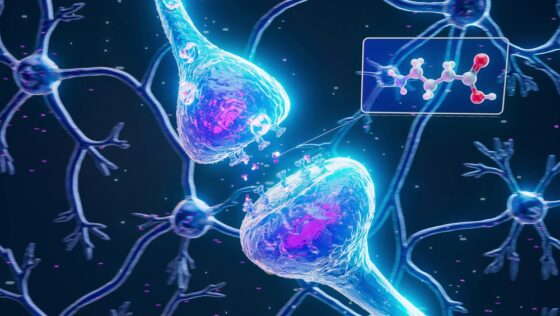
In psychiatry, therapies often focus on electrical and chemical signals, not on neurons. So, while neuroscience has established that neurons are involved in all functions of the brain for human life and experiences, signals are often present and directly responsible.
So, antidepressants, antipsychotics, and anxiolytics target [for] chemical signals. Electrical, magnetic, and ultrasound stimulations target [for] electrical signals.This means that neurons are more or less bypassed, so to speak, with targets going toward inducing or inhibiting electrical or chemical signals.
This makes both direct candidates for the human mind. This says that there are no neural correlates of mind therapy, making the quest for neural correlates of consciousness unaligned with psychiatry. This means that if the human mind is linked with electrical and chemical signals, then human consciousness is close.
So, human consciousness can be defined, conceptually, as the interaction of the electrical and chemical signals, in sets – in clusters of neurons – with their features, grading those interactions into functions and experiences.
The human mind is the collection of all the electrical and chemical signals, with their interactions and attributes, in sets, in clusters of neurons, across the central and peripheral neThis means that what can be isolated as the mind are electrical and chemical signals. The same can be applied to consciousness.
What makes this viable is that the mind, being electrical and chemical signals can also define human intelligence, display parallels for what substance use and mental disorders are, on the mind.
Electrical and chemical signals mechanize functions. Functions are memory, emotions, feelings and regulations of internal senses.
Attributes of functions, or what grade functions into use are attention, subjectivity, intent and less than attention.
These functions and attributes can be described directly by the actions of electrical and chemical signals. Functions and attributes can be used to develop a standard to measure sentience for LLMs. It can solve some of the debates about AI consciousness. It can also shape how animal consciousness is understood for animal welfare.
However, in trying to understand what human consciousness is, the mind is the first goal, which then is electrical and chemical signals. Any lobe in the brain has electrical and chemical signals. Wherever in the brain that consciousness is said to occur has electrical and chemical signals.
Even where consciousness is not said to be mostly present, like the cerebellum has electrical and chemical signals. So, explaining for electrical and chemical signals, using the postulate in Conceptual Biomarkers and Theoretical Biological Factors for Psychiatric and Intelligence Nosology, could move how to understand the mind, mostly to estimate and display several aspects of psychiatric disorders.
There is a new [November 1, 2026] report by 13abc, Four-county mental health renewal levy heads back to November ballot, stating that, “Voters in Defiance, Fulton, Henry and Williams counties will see a renewal levy on the ballot in less than two weeks. The levy funds the Four County Alcohol, Drug, and Mental Health Services Board, known as ADAMhs, which has provided public and private mental health services across the four counties since 1978.”
“The five-year levy on the November 3 ballot will be familiar to residents. The board passed its first levy to sustain these services in 1982, and voters have renewed it every time it has made its way back to the ballot.”





1 Comment
It’s becoming clear that with all the brain and consciousness theories out there, the proof will be in the pudding. By this I mean, can any particular theory be used to create a human adult level conscious machine. My bet is on the late Gerald Edelman’s Extended Theory of Neuronal Group Selection. The lead group in robotics based on this theory is the Neurorobotics Lab at UC at Irvine. Dr. Edelman distinguished between primary consciousness, which came first in evolution, and that humans share with other conscious animals, and higher-order consciousness, which came to only humans with the acquisition of sophisticated language (especially math and logic). A machine with only primary consciousness will probably have to come first.
What I find special about the TNGS is the Darwin series of automata created at the Neurosciences Institute by Dr. Edelman and his colleagues in the 1990’s and 2000’s. These machines perform in the real world, not in a restricted simulated world, and display convincing physical behavior indicative of higher psychological functions necessary for consciousness, such as perceptual categorization, memory, and learning. They are based on realistic models of the parts of the biological brain that the theory claims subserve these functions. The extended TNGS allows for the emergence of consciousness based only on further evolutionary development of the brain areas responsible for these functions, in a parsimonious way. No other research I’ve encountered is anywhere near as convincing.
I post because on almost every video and article about the brain and consciousness that I encounter, the attitude seems to be that we still know next to nothing about how the brain and consciousness work; that there’s lots of data but no unifying theory. I believe the extended TNGS is that theory. My motivation is to keep that theory in front of the public. And obviously, I consider it the route to a truly conscious machine, primary and higher-order.
My advice to people who want to create a conscious machine is to seriously ground themselves in the extended TNGS and the Darwin automata first, and proceed from there, by applying to Jeff Krichmar’s lab at UC Irvine, possibly. Dr. Edelman’s roadmap to a conscious machine is at https://arxiv.org/abs/2105.10461, and here is a video of Jeff Krichmar talking about some of the Darwin automata, https://www.youtube.com/watch?v=J7Uh9phc1Ow