

By Former Sedona City Councilman Cliff Hamilton
Sedona,AZ — This Could Be You…
It started out as just an ordinary Friday afternoon drive down 89A in West Sedona to meet a business client. It ended up with the driver, through no fault of her own, having Sedona police take away her means of transportation and issue a $500 citation.
Anyone who drives in Sedona could end up just like her.
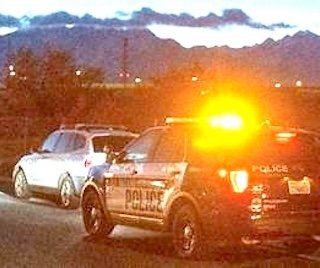
She was stopped at a traffic signal waiting to turn onto a side street when she noticed a Sedona city police car inching up very close to her back bumper looking at something on the back of her car. As the signal changed and she began her turn, the red and blue police lights came on and the police car loud speaker ordered her to pull over.
Puzzled by the situation, she immediately stopped, rolled down her window and reached for her driver’s license as the officer approached. “I ran your license plate and you’re driving with no insurance,” the officer announces as he reaches her window. Opening her center console, she produces the required papers showing her vehicle insurance is all up to date and valid. “Sorry,” says the Sedona officer, “The state MVD computer says you don’t have valid insurance and that’s what we go by.”
Getting her insurance agent on the phone immediately, she hands the phone to the officer. The agent also verifies that her vehicle is fully insured with all of the required coverages. “MVD’s computer says it’s not so I’m going to seize your license plate so you can’t drive this car and issue you a citation for driving without insurance,” replies the officer. “It doesn’t matter what your insurance papers or your agent says. And, I can impound your car here right now if I want to,” he adds. “The fine is $500 and your court date is listed on the ticket. You can take it up with MVD when they open Monday.”
Minutes ago her world was fine. Now it’s all upside down. She is standing beside the road with no legal means of transportation, will miss her client appointment and is holding a $500 citation, despite having broken no law of any kind!
This could be YOUR story any time you are driving in Sedona. It could happen to you due to the numerous disconnect and failure points in the Arizona MVD vehicle insurance record system and because the Sedona Police Department’s enforcement policy fails to recognize those frequent MVD failures. SPD will not accept your required proof of insurance document each vehicle must carry. SPD blindly takes away your car and issues a citation if MVD’s computer says your insurance is invalid, regardless of how much documentation you provide to the contrary.
Here is how the MVD system is supposed to work. When that system recognizes it does not have a current insurance record for a vehicle it is supposed to mail a letter to the vehicle owner notifying them and allowing a period of time to either get a policy or tell their insurance agent to contact MVD and verify their coverage. In Arizona, mandatory insurance reporting is handled through the Arizona Mandatory Insurance Reporting System. All insurance companies (not agents) are supposed to automatically notify MVD of all new, renewed, and cancelled auto policies.
Disconnects and failures occur throughout the system starting with insurance agents and companies being slow or forgetful in reporting a change in policy. MVD letters to vehicle owners also get lost in the mail, sent to wrong addresses and fail to be sent at all. These and other sources of system disconnect can result in the MVD computer system falsely reporting to an inquiring officer that your insurance is invalid.
So through no fault of your own, in Sedona, you can be left standing beside the road with no legal transportation (possibly an impounded vehicle) and a $500 ticket in your hand. What do you do now?
Continuing the story above, the victim abandons her car and eventually borrows a car to drive to the MVD office in Cottonwood when they open on Monday morning. After a weekend of anxiety and frustration, MVD is happy to accept her insurance documents (the ones Sedona police would not) as proof of coverage and issue her a new license plate along with an apology for the disconnects in their system.
The citation and the court date still stand, however. While Arizona statute says that such a citation SHALL be dismissed if the required insurance coverage was in effect at the time the citation was issued, the recipient still has to live with the anxiety for weeks and take time from other obligations to appear in Sedona Municipal Court.
She arrives at court at the designated appearance time along with the officer. The officer testifies first. He acknowledges that he was randomly running license plates at the stop light when his computer indicated her vehicle was not insured. He testifies that she did show him insurance papers verifying her coverage and that her insurance agent also verified her coverage by phone. He doubles down again and again, however, claiming Department policy and state statute required him to proceed as he did. “You had other options,” remarks the judge.
Her testimony again includes showing her insurance documents and noting the verbal verification by her agent. “Is that true?” the judge asks the officer. “Yes, your honor,” he awkwardly replies. “This is absurd,” says the judge. “Case dismissed!”
The official part of her nightmare is over but more the ordeal remains. She still has to notify her insurance company of her new permanent license plate number, her vehicle lender and any other party with an interest in her car once MVD issues her new metal plate.
The City cannot do much to fix MVD insurance reporting system problems but the City can do something to fix badly-flawed police department enforcement policies. The Police Chief, City Manager and City Council members are all involved in setting city polices of certain kinds and at various levels. Blindly ignoring the failures of the MVD insurance reporting system in favor of writing citations any time it says a vehicle does not have insurance coverage while ignoring a preponderance of contrary evidence is an internal Police Department policy that can be and needs to be changed. Hiding behind the claim that state law requires the current enforcement approach is defenseless behavior.
Police Department policy allowing officers to randomly run individual vehicle license plates absent any active enforcement action, suspicious behavior or probable cause of a violation is not allowed by some police agencies because of its high potential for abuse. This SPD policy that directly led to the situation chronicled above also needs review by city officials.
Ultimately the system worked as it is supposed to but not before a completely innocent Sedona resident suffered through a costly, time-consuming, anxiety-laden ordeal that never should have happened – and is still happening. Anyone driving in Sedona, a resident, visitor, out-of-town business employee – anyone, could be the next victim of poor police enforcement policies and an error-prone MVD computer system.
3 Comments
Why did the officer say they stopped the vehicle? Invalid insurance is not probable cause to even run a license plate through the LEIN system. It is illegal for officers to run plates for no reason other than hoping to find out the possible driver has wants and warrants, an invalid or expired license or insurance. Now if the plates decal was expired that would be sufficient probable cause to stop someone and run their plate out of an abundance of caution for officer safety. I’d have to see the officers vehicle body camera footage to make a definitive judgement on whether the officer was following protocol or not.
It is a National policy and law (for all legally sworn and certified officers) that probable cause is required to stop a vehicle or run their plates while in motion. States and local municipalities cannot override this law. The system used to run plates is Federally regulated and monitored. Gone are the days of cops using the system to find out where the cutie they just saw lives utilizing the system to hunt down people individual officers decide to unlawfully hunt down in hopes of finding them guilty of something… anything as this story seems to depict.
This exact thing happened to a friend on I-17. It’s not specific to Sedona, so let’s get real about the bias here.