

By David Stephen —
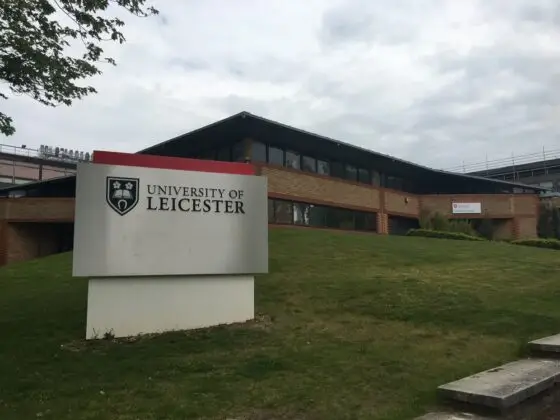
Sedona, AZ — The School of Psychology and Vision Sciences at the University of Leicester are about to waste time and efforts in their [May 7] 2026 Sluckin Lecture by inviting Anil Seth to diction about consciousness.
Anil Seth speaks multiple times a year. He has written a book on consciousness. He publishes papers every year and does various interviews including giving quotes to reports. Anil Seth has not made any contribution to progress in neuroscience, or moved knowledge forward on anything useful on anything relevant.
The introductory profile [World-leading consciousness scientist to deliver Sluckin Lecture 2026] written about the lecture mentions that Anil Seth “has transformed contemporary understanding of how subjective experience arises from the biological processes of the brain.”
How did he do that? Where and when? At least references should affirm.
It also said his work is addressing “how and why we experience the world as conscious beings”. OK. So, so far, how do people use what he has answered for any pressing need at this time? Anil Seth has said “Nobody knows how and why consciousness happens.” OK. So, why is he world-leading, and not a quack if he’s supposed to be working in the field, and not know, like everyone else?
Is the School of Psychology and Vision Sciences at the University of Leicester not paying attention to the news? Of everything that is adjacent to psychology and vision science in recent years, can they not find things that would matter to the University community, or the academe at-large, to be transformative?
Have they not heard about AI delusion and psychosis? Have they not heard about social media addiction? Have they not heard about Meta glasses, Google AI smart glasses and all kinds of visual wearables that may have intrusive effects? Have they not heard about problem gambling? Are they not aware of increasing news of emotional plunges resulting in divorce murder-suicides? Or, political violence that may be due to delusions? Have they not heard about AI deepfakes [especially videos and images]? Have they not heard about some very repugnant therapies, suggested by some experts, to ease mental health and how they should find ways to rebut those?
Does Professor Wladyslaw Sluckin [1919–1985] deserve lectures — appended to his name — that do not have any usefulness to society, now or in future? In this era of so much uncertainty globally, is it prudent to waste resources?
The profile also mentioned that Anil Seth gave a TED talk, and can “communicate complex scientific ideas to broad audiences has been recognised with prestigious honours including the Royal Society Michael Faraday Prize for science communication.”
OK. Maybe Anil Seth as a journalist. Even if they’d want to have a journalist, why not invite some reporter at some major news house that has been writing something relevant that can stoke hopes for advances in psychology?
Right now, the American Psychiatric Association is looking at adjustments in nosology after the Diagnostic and Statistical Manual of Mental Disorders, Fifth Edition, Text Revision [DSM-5-TR]. There are currently no answers in psychiatry to explain mental disorders and addictions, not in the United States, not in the United Kingdom.
The British Psychological Society [BPS] and the Royal College of Psychiatrists [RCPsych] have not been able to advance more than both APAs in the United States against unexplainable mental disorders.
What can be done? What should be done? What is the channel to try? How can all efforts advance towards the goal? If the objective is to at least understand how the brain works, what are serious efforts to do so?
Every Psychologist and Psychiatrist in the United Kingdom and the United States should be indignant because how the brain works is not understood — to find routes against mental disorders.
It is this relentless displeasure that should induce The School of Psychology and Vision Sciences at the University of Leicester to use the opportunity of the Sluckin Lecture for a relevant topic and a relevant expert.
In the field of consciousness, there is no failure because they ask aimless questions that nothing is ruled out. They are not accountable to themselves, to whoever funds them or to others. There is nothing that can go wrong in society that the people in consciousness can take responsibility for, to then try and work hard around, so that they make efforts to advance society.
Consciousness
Consciousness is not a relevant science. The question of “how and why we experience the world as conscious beings” is completely worthless if that is the focus of a research field. The question is so broad, and not about the brain, so no answer can be correct, which means consciousness is forever unsolved.
However long consciousness science has been active, even if they have not solved it, there should at least already be several sidewalk benefits against mental disorders and addictions.
Nothing. There has not been any contribution to anything differential in neuroscience because of consciousness science research. Even in coma and anesthesia, neurology and anesthesiology would do great without any consciousness input. So, what have they done?
There is a competition between two [leading] useless theories in consciousness. So, if one wins, how does that ease mental disorders and addictions? If there is no answer to that from now, why not test both against mental disorders and addictions [straightforward].
Why waste resources at a time that the world is desperate for answers as the cataclysm of mental conditions hits some individuals and ricochet to loved ones and society?
What does consciousness have to offer society today? Of everything in the news, what do they ever have to say, usefully that their work can help solve?
Consciousness is a philosophical term. But consciousness is not a philosophical problem. The only thing that progresses in consciousness is more labels. And most debates about consciousness are often not concerned with the brain, but labels.
Who really cares what subjective experience is or is not, for someone who has lost everything to gambling addiction or someone who is unable to function because of a serious mental illness?
What is in the brain?
To find out how the brain works, the first thing is to throw away all the labels. Whatever label is used to define or describe anything about the brain should be discarded.
Then, look in the brain for components and their mechanisms. Now, in seeking components, what does the evidence say, for those that are directly implicated for human life and experiences?
Neurons. Empirically-supported neuroscience shows that everything done that makes an individual relate with the world and run internal processes are linked with neurons. So, whatever ways that the brain can be explained, even conceptually, has to do with neurons.
But then, neurons are cells. They are not anatomically flexible to configure every function, distinctively. This means that an associated option must be considered.
Now, looking at neurons, they never run functions without their electrical and chemical signals. Electrical signals are served by ions. Chemical signals are molecules.
Since neurons are often in clusters. It can be theorized that electrical and chemical signals are in sets, and it is in those sets that they configure or assemble functions. It is theorized that they do so by interactions. Interactions that have attributes — which are states at the time of the interactions — that decide the extents to which interactions occur.
It is possible to use this postulate to describe all mental disorders and addictions, resulting in a new direction to approach them and prospect therapies.
Simply, what does neuroscience have now that can be used to understand the brain? Electrical signals and chemical signals.
There is no neurologist,
Other likely candidates like genes and astrocytes are not strong enough. Genes are not the mind. Astrocytes support neurons; in the instances they do more, they use chemical signals, which can be assumed to be a part of sets.
This means that progress is within the brain and electrical and chemical signals are the next candidates. This path is also useful to advance from DSM-5-TR, which the RCPsych and the BPS should be desperately mining.
So, what is human consciousness? Human consciousness can be defined, conceptually, as the interaction of the electrical and chemical signals, in sets — in clusters of neurons — with their features, grading those interactions into functions and experiences.
Simply, for functions to occur, electrical and chemical signals, in sets, have to interact. However, attributes for those interactions are obtained by the states of electrical and chemical signals at the time of the interactions.
So, sets of electrical signals often have momentary states or statuses at which they interact [or strike] at sets of chemical signals, which also have momentary states or statuses.
Attributes can be used to explain subjectivity, intent, attention and less than attention, or peripheral attention. These same processes [interactions and attributes of electrical and chemical signals] that mechanize what is referred to as consciousness, do so for everything else, everywhere else in the brain, including the cerebellum.
Since consciousness is a neuroscience problem, this is the conceptual direction to explore.
Anil Seth and consciousness
Anil Seth does not deserve to be called a neuroscientist. It would be fitting to call him a charlatan because he has once said that, “understanding how the brain works is not a solved scientific problem and it’s unlikely to be so anytime soon.” So, when evidence shows that neurons are involved with their electrical and chemical signals, should that not be where to focus, for progress, at least to use what can be proven to explain mental disorders and addictions, so society moves forward? Whatever he studies is not neuroscience for progress.
Anil Seth has been saying that the brain does controlled hallucination for years, so at the lecture, someone should ask him:
What exactly in the brain does controlled hallucination? Glia, genes, neurons, electrical signals, chemical signals, lobes or what?
Whatever he answers, ask how, even theoretically?
Or, if that is too much, ask him that if the brain makes prediction, what — in the brain — does and how?
Anil Seth has been working on perceptual census among people, lecture attendees should ask him this, there are individuals whose difficulties with addiction is due to seeing the trigger, how can his research help them, by just 20%?
Or, for people that have visual hallucinations in a mental illness, how can his work help them?
In consciousness, there are lots of nonsense like the sun is conscious, quantum is conscious, or theories like phi or workspace means consciousness.
If your best proposal is controlled hallucination, you appear like the sensible one.
Consciousness is a field that is sustained by entrenched cruelty and deception. Those that hand them platforms to speak, publish, give quotes, fund them, or whatever else are fortifying stagnation. The School of Psychology and Vision Sciences at the University of Leicester has betrayed progress. Their casualties are those suffering from mental disorders and addictions and the losses, to society, across and beyond Britain.
1 Comment
It’s becoming clear that with all the brain and consciousness theories out there, the proof will be in the pudding. By this I mean, can any particular theory be used to create a human adult level conscious machine. My bet is on the late Gerald Edelman’s Extended Theory of Neuronal Group Selection. The lead group in robotics based on this theory is the Neurorobotics Lab at UC at Irvine. Dr. Edelman distinguished between primary consciousness, which came first in evolution, and that humans share with other conscious animals, and higher order consciousness, which came to only humans with the acquisition of language. A machine with only primary consciousness will probably have to come first.
What I find special about the TNGS is the Darwin series of automata created at the Neurosciences Institute by Dr. Edelman and his colleagues in the 1990’s and 2000’s. These machines perform in the real world, not in a restricted simulated world, and display convincing physical behavior indicative of higher psychological functions necessary for consciousness, such as perceptual categorization, memory, and learning. They are based on realistic models of the parts of the biological brain that the theory claims subserve these functions. The extended TNGS allows for the emergence of consciousness based only on further evolutionary development of the brain areas responsible for these functions, in a parsimonious way. No other research I’ve encountered is anywhere near as convincing.
I post because on almost every video and article about the brain and consciousness that I encounter, the attitude seems to be that we still know next to nothing about how the brain and consciousness work; that there’s lots of data but no unifying theory. I believe the extended TNGS is that theory. My motivation is to keep that theory in front of the public. And obviously, I consider it the route to a truly conscious machine, primary and higher-order.
My advice to people who want to create a conscious machine is to seriously ground themselves in the extended TNGS and the Darwin automata first, and proceed from there, by applying to Jeff Krichmar’s lab at UC Irvine, possibly. Dr. Edelman’s roadmap to a conscious machine is at https://arxiv.org/abs/2105.10461, and here is a video of Jeff Krichmar talking about some of the Darwin automata, https://www.youtube.com/watch?v=J7Uh9phc1Ow
Anil Seth worked with Dr. Edelman and others at the Neurosciences Institute (NSI) in the first half of the 2000’s. He was aware of the Darwin automata, and wrote much about them. After he left the NSI he left the “path,” imo.