
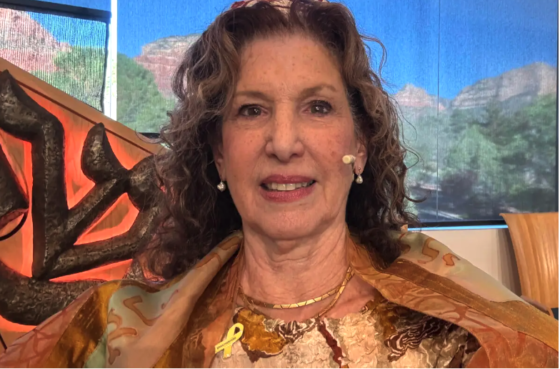
By Rabbi Alecia Magal
Sedona AZ — Jewish tradition teaches that Hebrew, Lashon HaKodesh (the Holy Language), is more than a means of communication. It is the language of Torah, prayer, and sacred connection. In Jewish mystical teachings, the letters and words of Hebrew are even understood to be the very building blocks of creation itself. According to the Kabbalistic tradition, God created the world through divine speech, and the Hebrew letters carry within them spiritual energy and creative power. Every letter is seen not merely as a symbol, but as a vessel of holiness and meaning.
The words of our prayers have been spoken and sung by generations of Jews across centuries, carrying the hopes, gratitude, and spiritual longing of our people. When we pray in Hebrew, we join our voices to an ancient chorus that stretches across time and around the world.
One of the beautiful aspects of Hebrew prayer is that its power is not limited to intellectual understanding. Even when we do not know the meaning of every word, the melodies, rhythms, and sounds of Hebrew can touch us deeply. The chanting of ancient prayers engages more than the mind; it resonates in the body and the heart. The rise and fall of the melodies, the repeated sacred sounds, and the communal experience of singing together can create a sense of calm, peace, and belonging.
During Erev Shabbat services, many people describe feeling a shift as they listen to and join in the Hebrew prayers. The sounds themselves become a pathway from the busyness of the week into the sacred rest of Shabbat. Like beautiful music that moves us without explanation, Hebrew prayer can awaken feelings of comfort, wonder, and spiritual presence even when the words are unfamiliar.
As we gather on Friday evening, we allow the ancient language of our tradition to wash over us. Whether we understand every word or simply absorb the melodies, the sacred sounds of Hebrew can help open our hearts, quiet our minds, and welcome the peace of Shabbat into our lives. In this way, Hebrew prayer offers not only meaning to the intellect but nourishment to the soul, connecting us to the holiness woven into creation itself.
All are invited to Erev Shabbat service on Friday, October 23 at 5:30 pm led by Rabbi Magal, followed by refreshments and a chance to greet each other. Details about all our services, programs, classes, and archived videos are listed on our website: jcsvv.org.
The Social Action Committee is collecting non-perishable foods, as well as infant formula and personal care products, for the local Sedona food pantry. Please drop off your donations in the bin provided for collections located at the bottom of the stairs in the parking lot.
The Jewish Community of Sedona and the Verde Valley, located at 100 Meadowlark Drive off Route 179 in Sedona, is a welcoming, egalitarian, inclusive congregation dedicated to building a link from the past to the future by providing religious, educational, social and cultural experiences. Visitors are welcome to attend services after a security check. Those who cannot attend in person can access the service through zoom. Office telephone: 928 204-1286.
Rabbi Alicia Magal
Jewish Community of Sedona and the Verde Valley, Arizona, USA
www.jcsvv.org
Office: 928 204-1286
“A Jewel of a Shul”
Mission Statement:
The Jewish Community of Sedona and the Verde Valley is a welcoming, egalitarian, inclusive congregation dedicated to building a link from the past to the future by providing religious, educational, social and cultural experiences. We choose to remain unaffiliated in order to respect and serve the rich diversity of our members and visitors.