

By David Stephen
There is a recent [July 4, 2026] feature on Space Daily, Physicist Roger Penrose has spent decades arguing that consciousness isn’t something the brain produces, but that explaining it will require physics we haven’t yet discovered, stating that, “Roger Penrose does not think a computer will ever be conscious, and he does not think a brain running on ordinary neural computation would be conscious either. For close to forty years, the Oxford mathematical physicist has argued that consciousness cannot be the product of algorithmic processing at all, and that explaining it will require physics we have not yet dis
“Penrose developed the idea, called Orchestrated Objective Reduction, with the anaesthesiologist Stuart Hameroff, whose interest came from watching what general anaesthetics do to consciousness.”
“Orch-OR is unusual among consciousness theories in making a claim precise enough to test outside the brain altogether. If gravity really does trigger the collapse of quantum superpositions at the scale Penrose describes, that collapse should show up in careful physics experiments that have nothing to do with biology.”
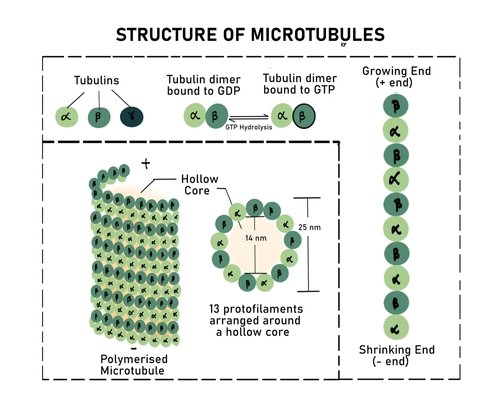
“Put together, the theory says something specific and testable in principle: that consciousness arises not from information processing in the ordinary computational sense, but from a physical event, gravity-linked quantum collapse, occurring inside a particular cellular structure.”
Questions for Penrose and Hameroff
What exactly is the purpose of solving consciousness?
What is the seriousness of the problem, if Orch-OR is an option to solve consciousness?
Is consciousness harder to solve than human intelligence? Is consciousness tougher to solve than neurological disorders? Is consciousness more complex to solve than mental disorders?
Assuming that it is proven that Orch-OR has solved consciousness, is there anything about it that says that it would solve or explain human intelligence, mental disorders or neurological disorders?
If Orch-OR has predictions, if it can be generalized, if it can be falsified, if it can be measured, does that make it right? This question means that since different people have different ways to describe consciousness, one person can solve their own version of consciousness, but what else can Orch-OR solve about the brain, or at least explain that would show that it is crossover theory or can be useful beyond niche definition?
Why does it feel like Orch-OR is trying to use physics to validate itself?
Can Orch-OR be used to explain any addiction: drugs, gambling, social media or anything?
Can Orch-OR explain emotion, memory or feeling?
Simply, in July, 2026 is there any major problem that Orch-OR can solve at scale or at least explain, to move any central neuroscience knowledge forward?
Consciousness
Across neuroscience, electrical and chemical signals have been demonstrated to be more implicated in functions that microtubules. There are [more] therapies in psychiatry targeting for electrical and, or for chemical signals, than microtubules.
There are ways to explain biological factors of functions — in the brain — by electrical and chemical signals, than by microtubules.
It does not appear that if the human mind is defined, it will be defined with microtubules.
So, while it is possible that their version of what consciousness is, can be defined and solved with Orch-OR, it does not seem that it can actually be used to describe much else, regarding the mind.
So, human consciousness can be defined, conceptually, as the interaction of the electrical and chemical signals, in sets — in clusters of neurons — with their features, grading those interactions into functions and experiences.
Simply, for functions to occur, electrical and chemical signals, in sets, have to interact. However, attributes for those interactions are obtained by the states of electrical and chemical signals at the time of the interactions.
So, sets of electrical signals often have momentary states or statuses at which they interact [or strike] at sets of chemical signals, which also have momentary states or statuses. So, if, for example, in a set, electrical signals split, with some going ahead, it is in that state that they interact, initially, before the incoming ones follow, which may or may not interact the same way or at the same destination [or set of chemical signals]. If a set [of chemical signals] has more volumes of one of the constituents [chemical signals], more than the others, it is in that state too that they are interacted with.
So, while functions are produced by interactions, the states of the signals, at the time of the interactions, may determine the extent to which the interactions occur. This means that what is termed attention is an attribute of high volume for [a set of] chemical signals or high intensity for electrical signals [in a set]. Subjectivity is the variation of volume of chemical signals from side-to-side. Intent is a space of constant diameter, in some sets, for some volumes, conceptually.
There are other attributes like sequences, which are paths [old or new] traveled by the electrical signals. Sequences explain why several interpretations are quick and precise, since they [sets of electrical signals] use an old sequence or a defined route towards the interpretation. It means that what came in already knows which way to go, for interaction [of interpretation].
A reason some sudden sound could be jolting or shocking could be the use of a new sequence towards interpretation. This could also occur by the intensity of electrical signals or high-volume chemical signals [in a set].
Attributes also include thin and thick sets of chemical signals. There are splits of electrical signals, explaining what is called prediction. There is the principal spot [or measure] of a set, arrays, and so forth.
So, electrical and chemical signals interact to produce functions. The states of the signals at the time of the interactions become attributes that decide the extent to which they interact. Consciousness is principally a collection of all functions and attributes.
The measure of electrical and chemical signals for humans can be used for other organisms with electrical and chemical signals. For those without [interacting electrical and chemical] signals, the labels of emotions, feelings, memory and regulation of internal senses can also be used, with general attributes, attention, awareness, intent and subjectivity.
This is at least how to try to explain, using established evidence [electrical and chemical signals] in neuroscience to answer for what consciousness includes, especially to also explore a measure, where other organisms compare and maybe AI.
Human Intelligence
At this time, the most important conceptual brain problem is not consciousness, but intelligence, human intelligence.
This means that how does human intelligence work in the brain. Already, it is assumed that there is artificial intelligence, so what is human intelligence, exactly? How does AI compare? How distant is AGI?
What are the components of intelligence in the brain? What are their mechanisms? What is the relationship between intelligence and consciousness, regarding components and mechanisms?
For now, the next thing to solve or ask about is not AI consciousness, or LLMs sentience, if intelligence [in the brain] remains unknown.
Why, because there is already an availability of it [intelligence] in humans and machine.
Also, answering for human intelligence can prospect how to build new explanations for consciousness.
Orch-OR theory has no answer for anything about intelligence. An Orch-OR proponent rules out consciousness in machines, but has not defined what intent is in the brain, or subjective or attention, at least.
Orch-OR
The Orch-OR theory was first proposed in the mid 1990s. It has not solved or answered anything else [consequential] in the brain, to at least ensure it is useful. It does not matter if people counter it, but it if is useful, then it is cool.
It is possible that the proponents can wait for some new physics or whatever else, but it does not appear that Orch-OR is ready for primetime.
There is a new [July 5, 2026] analysis on Quantum Zeitgeist, Roger Penrose, The Definitive Profile Of The 2020 Nobel Quantum Mind, stating that, “It is important to be clear about the status of Orch-OR. It is a controversial, minority hypothesis, not established science, and most neuroscientists and physicists regard it as unproven at best. A common objection is that the warm, wet brain should destroy delicate quantum states far too quickly for them to matter.”
“Penrose and Hameroff have continued to defend and refine the theory, and a handful of experiments have probed quantum effects in biological molecules. Even so, no result has confirmed Orch-OR, and readers should treat it as a bold conjecture about consciousness rather than a settled account of how the brain works.”