

 KYKOTSMOVI, HOPI NATION (June 29, 2021) – When the COVID-19 pandemic impacted both the Navajo and Hopi nations, it set matriarchal leaders from the Navajo and Hopi nations in motion to organize relief efforts and protect their communities.
On March 17, 2020, the Navajo Nation reported its first case of COVID-19 when a 47-year-old Navajo man from Chilchinbeto tested positive for the virus.
Two days earlier Navajo & Hopi Families COVID-19 Relief Fund Co-Founder and Interim Executive Director, Ethel Branch, had created a GoFundMe campaign to support direct relief efforts to Navajo and Hopi elders, immunocompromised, and vulnerable families. She had also mobilized a group of Navajo and Hopi women leaders–including Pamela Lalo and Lilian Hill–to orchestrate a broad relief effort across the two nations.
The Relief Fund made its first food distribution to Navajo Community Health Representatives on March 17, in which some of the food was routed to the families placed in isolation and quarantine in Chilchinbeto. The third distribution was to the Hopi Villages of Bacavi and Oraibi.
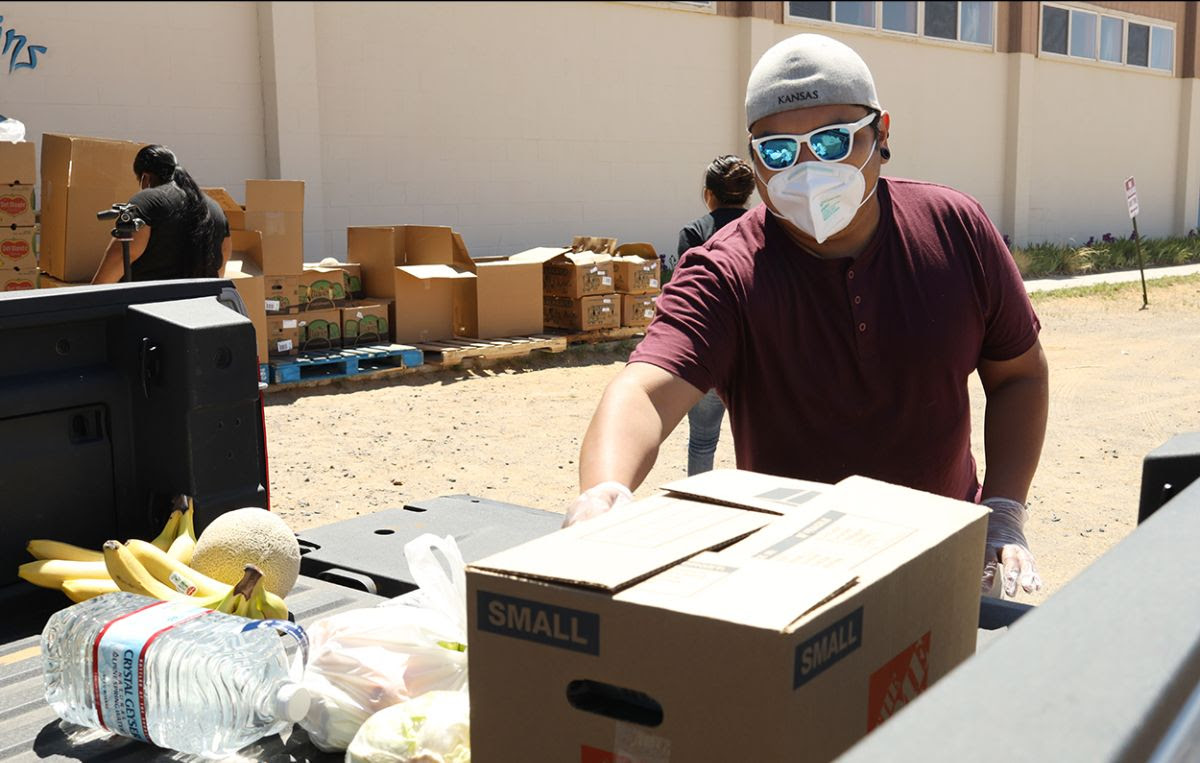
At the time, Lalo said that no other organizations were providing relief efforts throughout the entire Hopi Nation.
“Ethel contacted me to come aboard the Relief Fund as the Hopi Team Lead. At that time, a Hopi woman named Lilian Hill also volunteered to assist the distribution efforts,” Lalo said. “Both her and I became co-leads and we worked with the tribe to establish protocols for distribution.”

Lalo and Hill worked directly with the Hopi Villages to assess the current needs. They also found locations for delivery, sanitization of products, packaging, and distribution.
“We went Village to Village to find facilities to do breakdown, sanitization, distribution, and packaging. At first, the principal of Second Mesa Day School let us use their kitchens, which had all the amenities we needed,” Lalo said. “From this location, we were able to serve three Villages each time. We tried to get resources out to every Village. Some people didn’t have vehicles and some were scared. We tried to make it as easy as possible to get these resources out and people were very grateful.”
Lalo and Hill continued working with the Relief Fund throughout the crucial first five months of the pandemic. By September, the Relief Fund had developed a partnership with the Hopi Foundation to continue serving the Hopi Villages with direct relief.
Hopi Foundation Associate Program Director Samantha Honani said reports of the Navajo Nation’s first case filled many Hopi tribal members with fear.
“With this first case, we felt that we needed to establish a response plan immediately,” she said.
Within the Navajo Nation and the Hopi Reservation, roughly one-third of homes lack indoor plumbing. Both nations are food deserts, with only 13 full-scale grocery stores serving their combined 29,945 square mile-territory. Access to food and water resources on the two nations is inadequate compared to those available in communities that border both tribal nations.
“Existing infrastructure, environmental, and economic conditions led our people to have a high incidence of underlying conditions. This, compounded with limited access to local food and water sources, made our people disproportionately vulnerable in the face of the pandemic,” Branch said. “The dire situation that faced our Navajo people was the same situation impacting our Hopi neighbors, so our leadership team felt it was important to work together to protect both tribal communities.”
As the pandemic continued into the fall, Branch invited Honani and other Hopi Foundation leaders to a Relief Fund meeting to discuss a longer-term concerted relief response.
“Since then we’ve created this amazing partnership,” Honani said. “They have been our largest and strongest partners during this whole effort. This partnership has been an amazing journey to benefit our people here on Hopi.”

According to Honani, the Hopi Foundation has always had an established Hopi Emergency Response Fund (HERF) with processes in place to receive funding from grants and both private and corporate donors.
“When COVID-19 was at our doorstep, we were able to respond with funding that we had already established, a process, a program and structure,” she said. “This was something good that was a step ahead for us and made it easier to launch into action.”
Establishing a community emergency relief project meant that Honani and the Hopi Foundation would need a staff of volunteers, which was hard to recruit because many feared contracting COVID-19.
“At one time, we had 20 volunteers, which was reduced to a handful of us, a skeleton crew,” Honani said. “We needed staffing because we did not see the end of COVID-19 and the summer months were approaching.”
The partnership with the Relief Fund supported the Hopi Foundation’s ability to source full-time staffing for the project, food and PPE resources, a vehicle, and critical equipment like industrial freezers and refrigerators.
“It’s helped to provide weekly services to all 12 Villages here on Hopi,” Honani said.
The consistent emergency relief distributions, public health education initiatives, and the recent COVID-19 vaccine rollout have benefited both nations. There is a declining trend of confirmed cases and a significant reduction in COVID-19 related deaths.
Hannah Honani is the Hopi Opportunity Youth Initiative Program Manager with the Hopi Foundation, and Samantha’s counterpart in organizing the emergency response. According to Hannah the movement towards herd immunity has prompted the redirection of their emergency response project towards increasing public education initiatives.
“We’re seeing a decline in the number of people infected by COVID-19. We’ve reported zero new cases in our community recently,” Hannah said. “However, we see our people leaving the community on the weekends. There seems to be an overwhelming sense of anxiety or restlessness from being home this whole time, and people want to get out more.”
By prioritizing the continued safety of their communities, the Hopi Foundation has increased messaging that advocates for residents to stay home and maintain safety precautions.
“This is a way for us to provide education that is in alignment with how people are moving throughout our community,” Hannah said.
Through its partnership with the Relief Fund, the Hopi Foundation has developed culturally relevant one-page COVID-19 information sheets that are translated into the Hopi language.
“This is another valuable resource that we have to affect our community,” Hannah said. “These one-pagers are a constant reminder to our people to stay safe and stay home.”
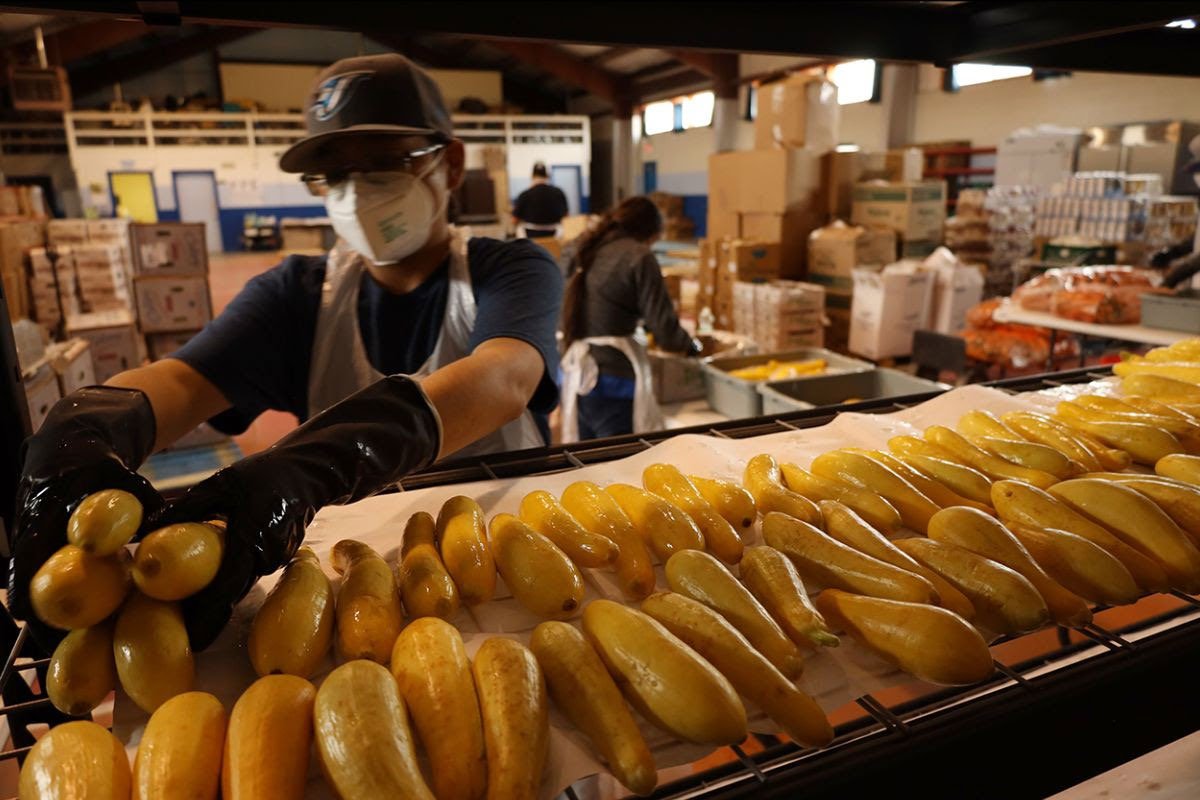
For Relief Fund Deputy Director Cassandra Begay, the partnership with the Hopi Foundation has been a testament to the strength and resourcefulness of indigenous women and their inherent responsibilities to protect their families and communities.
“In a time of stress and uncertainty, the Relief Fund and Hopi Emergency Relief Fund saw an opportunity to help each other to protect our most precious and sacred elders and vulnerable community members,” Begay said.
According to Samantha Honani, this trajectory of emergency response within both tribal communities stems from traditional teachings of protection.
“We definitely bring our teachings and cultural connections to this work. Our work stems from Sumi’nangwa, which loosely translates to mean ‘Coming together for the benefit of all,” Samantha said. “Hannah and I have identified this as the role of a Hopi female to protect our families and communities. This work very much comes from our hearts. Without this connection to tradition, this work could not be done.”
The Hopi Foundation and the Relief Fund thank the partners who have assisted their relief efforts, their amazing staff who have worked collaboratively, and the many volunteers who have stepped forward to protect the Hopi Villages from the COVID-19 pandemic.
1 Comment
Hopefully we can pass this covid pandemic quickly so it doesn’t drag on