

 Verde Valley AZ (June 22, 2019) – Researchers recently found the first instance of tamarisk beetles along the Verde River during routine monitoring. This is the first-time tamarisk beetles have been found in the over 434,000 acre Verde River watershed. The beetles feed only on the leaves of non-native tamarisk trees and can completely strip a tree of its leaves in a short time. After several years of defoliation and re-sprouting, some trees will die. This benefits river restoration efforts but can harm some bird species that have begun using tamarisks for nesting.
“This unexpected discovery of tamarisk beetles in the Verde Valley is going to change how we manage river restoration activities here,” according to Nancy Steele, Executive Director of Friends of the Verde River. “As tamarisk trees die from defoliation, they present hazards from fire and falling trees. Our crews will need to cut down and remove dead trees to reduce these dangers. In addition, revegetation becomes more urgent to ensure endangered birds have nesting locations in trees such as native willows.”
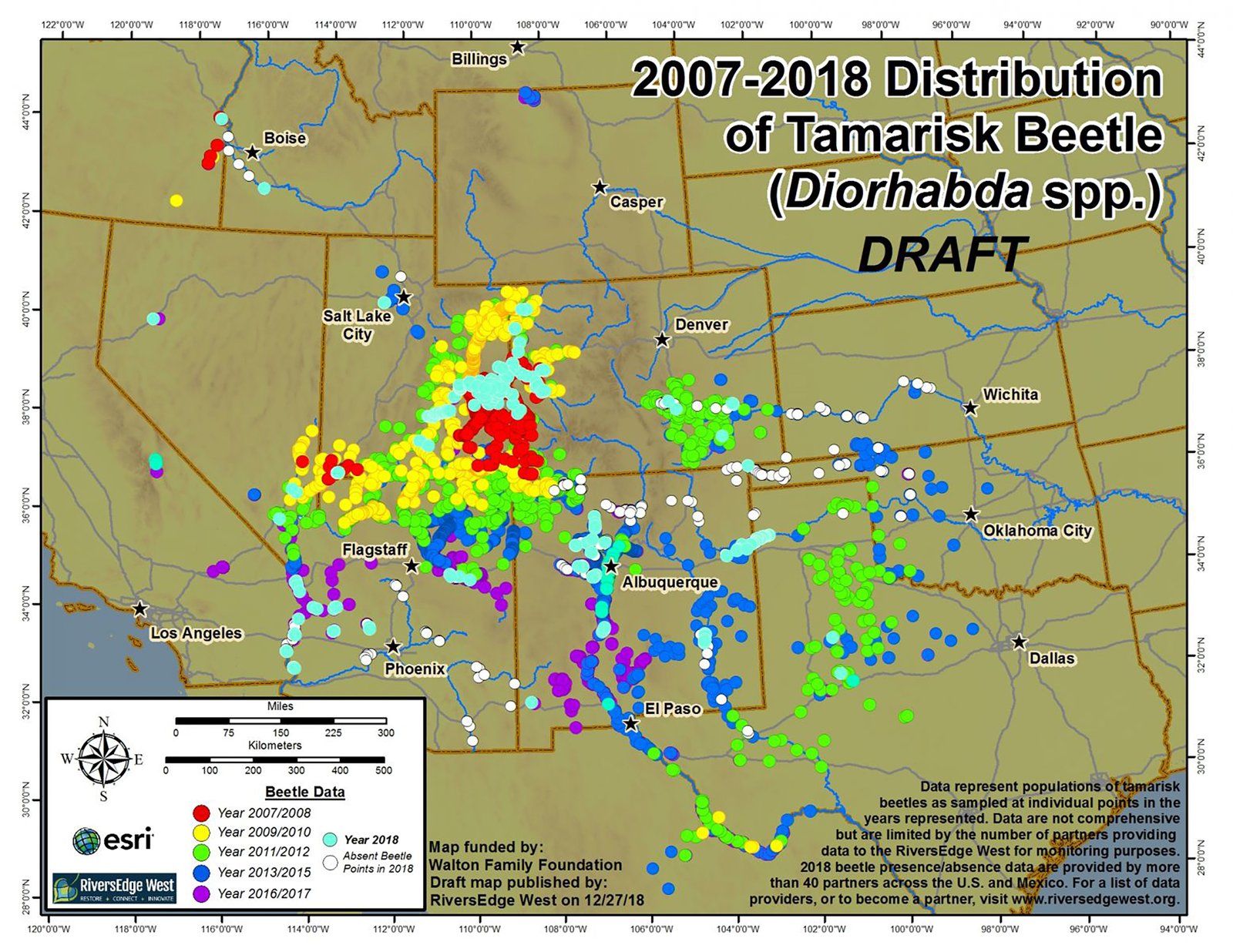
The US Department of Agriculture approved the use of beetles as a biocontrol agent for tamarisk in 2001. Releases occurred in Utah, Nevada, and Colorado. The beetles were not released in or expected to live within Arizona. After an unauthorized release of the beetles near St. George, Utah, however, distribution expanded along the Colorado River to Blythe, Arizona.
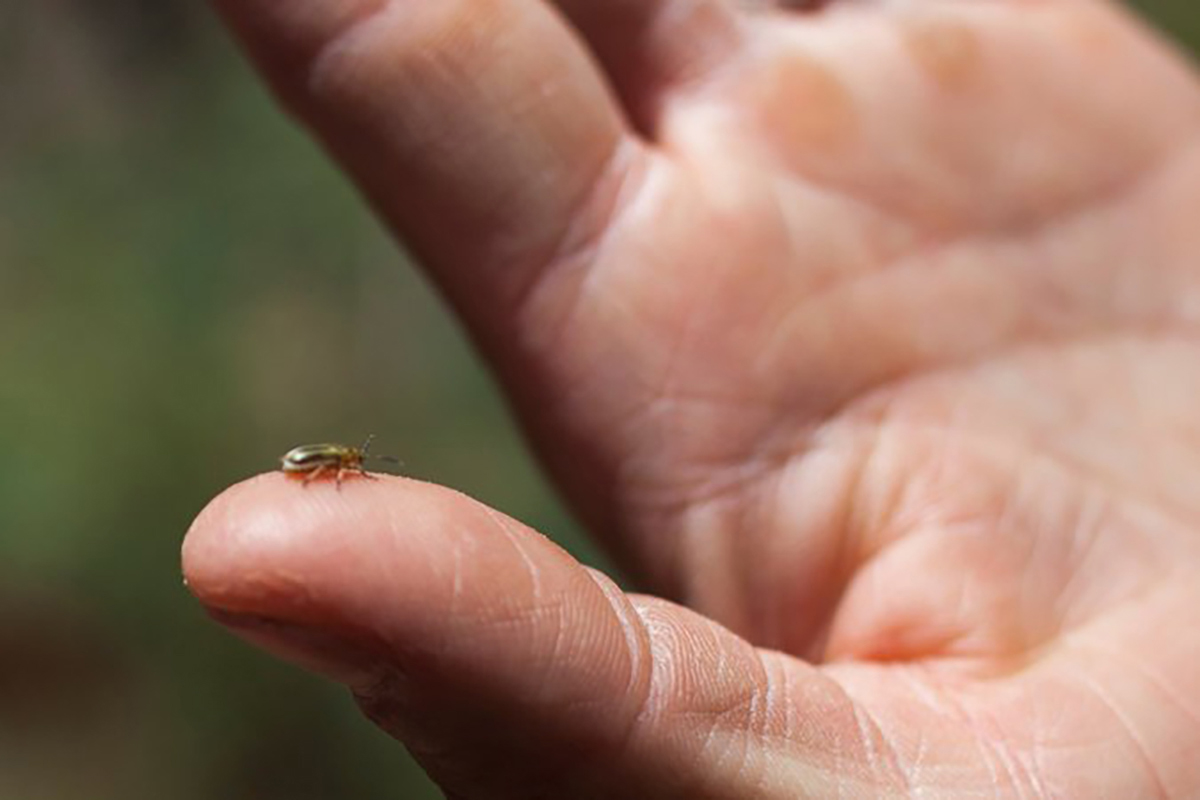 Non-native tamarisk, also known as salt cedar, was introduced in the U.S. in the early 1800s for use as an ornamental tree, in windbreaks, and to combat soil erosion. Tamarisk now occupies thousands of acres of floodplains and riverbanks, often pushing out native plants and altering habitat. The presence of tamarisk also increases fire risk in an ecosystem.
For the last nine years, Friends of the Verde River (Friends) and partners making up the Verde Watershed Restoration Coalition (VWRC) have removes invasive plant species, including tamarisk, from along riverbanks throughout the Verde River and its tributary streams such as Oak Creek. This work has allowed native plants to revegetate riverbanks and floodplains, benefiting native animals and improving river flow.
“Regenerating native riparian vegetation is key to a healthy Verde River system. Our partners in the Verde Watershed Restoration Coalition are committed to sustaining river flows and restoring habitat for native animals and plants” according to Friends’ Habitat Restoration Manager Tracy Stephens.
The defoliation of tamarisk trees, however, poses a risk to one species in particular – the endangered southwestern willow flycatcher. Large sections of the Verde River are critical habitat for the flycatcher, which nests in densely vegetated riparian areas.
According to the U.S. Fish and Wildlife Service’s Greg Beatty, “about half of the estimated 1,600 flycatcher breeding territories across its southwestern range contain an important amount of tamarisk. [In] some of these areas, like the upper Verde River, the effects of the beetle will likely be minimal due to the low amount of tamarisk. The landscape is able to generate native riparian vegetation. The spread of beetles into the Gila, Colorado, and Salt rivers could have a much greater impact.”
Defoliation during the nesting season removes the cover that protects nests, eggs, and nestlings. “Restoration efforts completed ahead of the beetle have allowed willows to regenerate,” Stephens said.
Researchers will continue monitoring for tamarisk beetle distribution throughout the summer, as part of the normal monitoring for invasive non-native plants and revegetation of native species conducted by Friends of the Verde River.
For more information, contact: Tracy Stephens, Manager, Habitat Restoration at TracyS@VerdeRiver.org.
About Friends of the Verde River:
Friends of the Verde River, (Friends), is a purpose driven community benefit organization and 501(c)(3) nonprofit. Friends envisions a healthy, free-flowing Verde River and tributaries that support our unique environment, a vibrant economy, and quality of life for future generations.www.VerdeRiver.org